Participation in the 2025 World Cooperative Conference in Montreal
International reach of the INNOGOUV project
Two presentations on French wine cooperatives
and an award of excellence
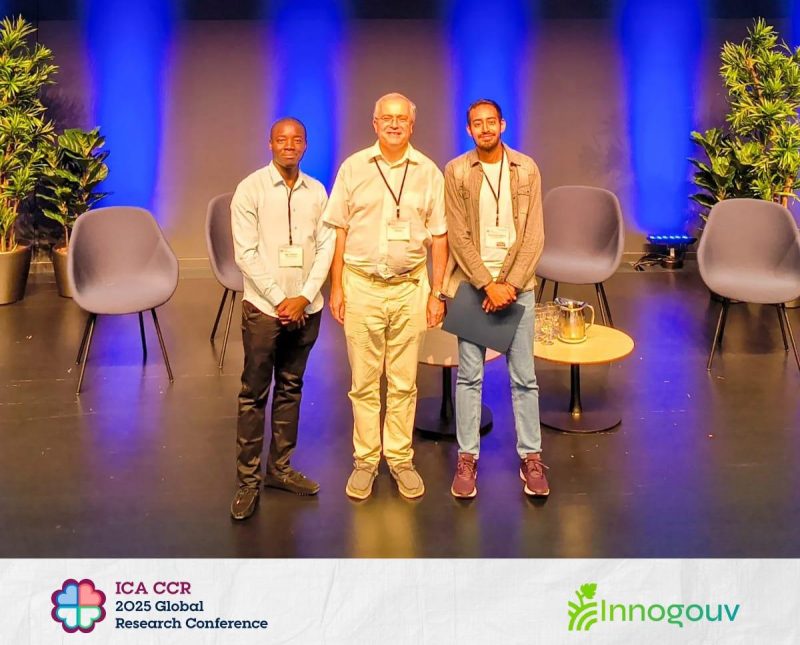
As part of the synthesising, dissemination, and knowledge-transfer activities of the INNOGOUV project, and as 2025 marks the United Nations International Year of Cooperatives, we had the pleasure of presenting two research works on French wine cooperatives at the 5th World Research Conference of the International Co-operative Alliance (ICA). Organized in partnership with CASC (Canadian Association for Studies in Co-operation) and hosted by the Alphonse and Dorimène Desjardins International Institute for Cooperatives (IICADD), this conference took place at HEC Montréal's new Hélène-Desmarais building in downtown Montreal, from July 8 to 11.
The conference emphasized the importance of inter-cooperation in driving transformative change for justice, sustainability, and prosperity, bringing together numerous actors from the international cooperative ecosystem, including practitioners and policymakers. Beyond discussions on the role of cooperatives in achieving the Sustainable Development Goals, the conference also provided an excellent opportunity to explore cooperative-related themes, notably cooperative governance, business models, and education.
From the drivers of innovation adoption
To the inclusion of young people in French wine cooperatives
The first work, presented by Mohamed Makraz and based on semi-structured interviews with 33 wine cooperatives and second-tier structures, aimed to identify the main drivers influencing the choice of cooperatives whether or not to plant new vine varieties adapted to climate change and/or resistant to diseases. The results suggest that agronomic advantages (mainly yield) and oenological advantages (satisfactory alcohol and acidity levels) constitute the main motivations, while appellation specifications and consumer acceptance of the wines represent the primary barriers. This work also highlights the positive role of cooperatives and their links with external stakeholders, including research centers, second-tier structures, and suppliers in adopting this type of innovation. (https://hal.science/hal-05252263v1)
The second work, presented by Louis-Antoine Saïsset and Yalé Koudou, focuses on the inclusion of young people in cooperatives and merchants within the French wine sector. It aimed to measure the level of inclusion of under-40s within these structures, based on their representation in governance bodies and managerial positions, and then to study the impact of this inclusion on sustainability performance and financial indicators. The results indicate that cooperatives integrate more young people than merchants do. Furthermore, the participation of young people in governance bodies is associated with better environmental, social, and financial performance, but lower qualitative performance (PDO/AOC and PGI). Conversely, their involvement in managerial positions is associated with better qualitative performance. (https://hal.science/hal-05175638v1)
Best Student Paper Award: a great distinction for the INNOGOUV project
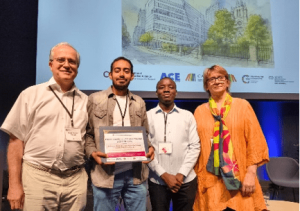
The conference was also the occasion for an award ceremony recognizing the best research work by early-career researchers. The paper written by Mohamed Makraz, Louis-Antoine Saïsset, Leïla Temri, and Iciar Pavez, members of the INNOGOUV project, and titled “Drivers of the adoption of varietal innovation in wine cooperatives in France“, received the award for best student paper in the French language. This prize was presented by researcher Sonja Novkovic, who specializes in social economy and cooperatives. https://hal.science/hal-05324002v1