Participation in the 45th OIV World Congress
of Vine and Wine in Dijon
The INNOGOUV project at the heart of the OIV centenary
A poster on the drivers of varietal innovation in French wine cooperatives
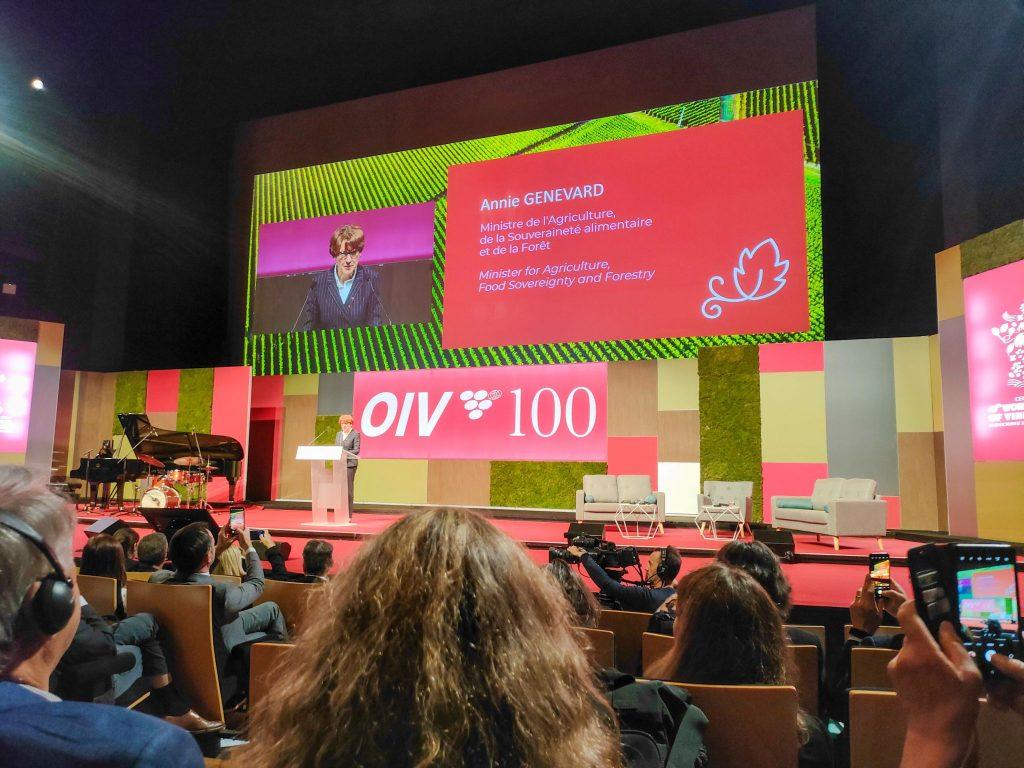
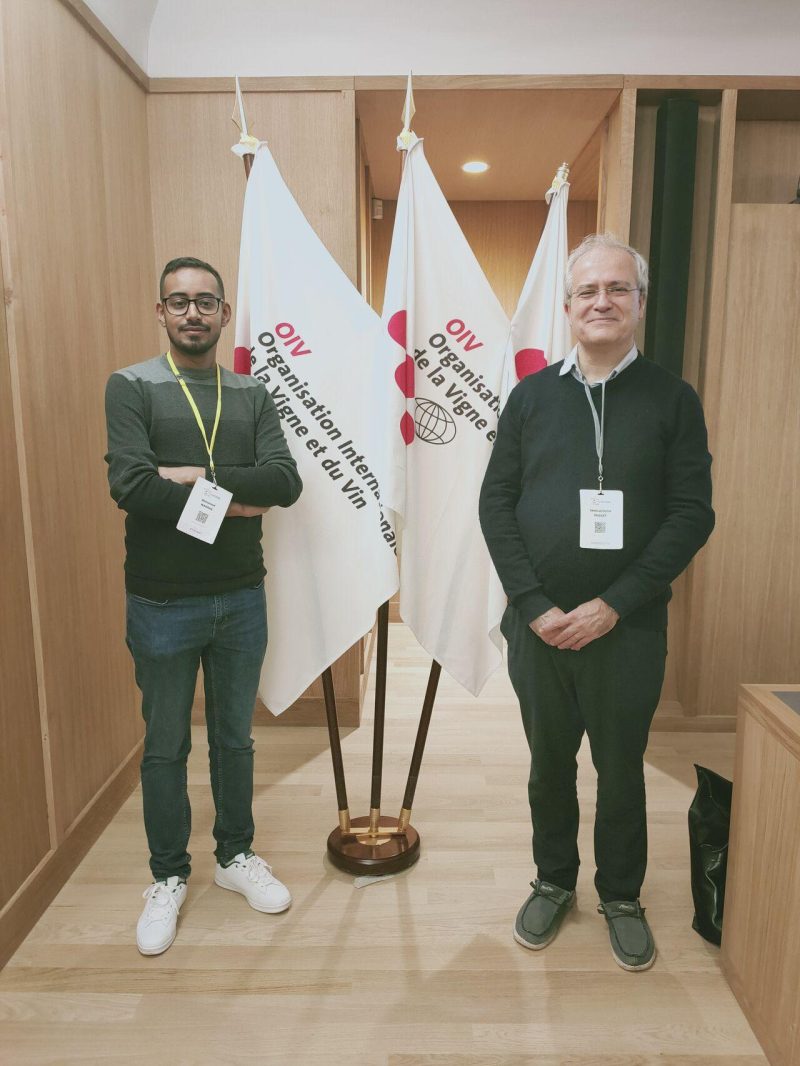
As part of the dissemination and knowledge-transfer activities of the INNOGOUV project, we had the pleasure of presenting a research poster on French wine cooperatives at the 45th World Congress of Vine and Wine, organized by the International Organisation of Vine and Wine (OIV) in Dijon from October 14 to 18, 2024. These first results are part of the Project INNOUGOUV’s wider framework, financed by the ANR, which studies the links between governance, innovation and sustainability performance of French wine cooperatives.
This edition was particularly special as it marked the centenary of the OIV. One hundred years after its creation, the wine sector finds itself at another turning point, facing major challenges: climate change, market instability, and shifting societal expectations. It was precisely around the theme “The Vine and Wine, an Innovative Heritage Facing the Century’s Challenges” that the Congress brought together several hundred researchers, scientists, and experts in the heart of Burgundy—a world-renowned region for wine and gastronomy. To mark the occasion, the OIV also inaugurated its new headquarters, located in the Hôtel Bouchu d’Esterno, a historic 17th-century building.
The digital poster presented by Mohamed Makraz, Louis-Antoine Saïsset, Iciar Pavez, and Leïla Temri (UMR MoISA, L’Institut Agro Montpellier; CIHEAM-IAMM), registered under number 2024-627 and titled “Drivers of varietal innovation in French wine cooperatives and cooperative unions: An exploratory approach,” outlines the initial results from semi-structured interviews conducted with 33 cooperative wineries and second-tier structures between July 2023 and March 2024.
Based on Grounded Theory (Corbin & Strauss, 1990), this qualitative approach identified the main factors influencing the varietal innovation process within cooperatives. The results distinguish two main categories of wineries according to their level of involvement in varietal innovation: the Pioneers, whose decision-making processes are more centralized, participatory, and market-driven, and the Followers, who are less engaged in this dynamic. These findings also highlight the potential role of cooperative governance models in promoting and implementing varietal innovation, as well as the importance of close relationships with professional and research stakeholders.