1st INNOGOUV webinar
Initial results of the qualitative survey
of cooperative wineries
On 20 March 2025, the first INNOGOUV project webinar was held, dedicated to presenting the initial results of the qualitative survey conducted between 2023 and 2024 among 36 cooperative wineries and unions across all French wine-growing regions. More than 60 participants took part in this meeting, which was rich in discussion. The webinar provided an opportunity to share an in-depth analysis of cooperative governance, its organisational methods, and its links with innovation dynamics and sustainability commitments. The results are based on 36 interviews conducted with 45 people, offering a diversity of viewpoints (presidents, directors, technicians, members, etc.).
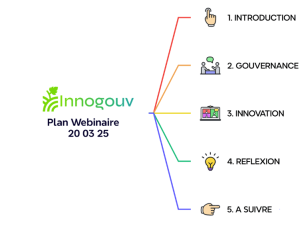
This webinar provided an opportunity to share rich preliminary results, focusing on four main areas:
- Cooperative governance, through the profile of members and leaders;
- The role of governance bodies in structuring decisions;
- The determinants of technological and varietal innovations observed in these organisations;
Lessons learned from the webinar
Multifaceted cooperative governance combining formal bodies (general meetings, boards of directors) and informal bodies (committees, working groups), with practices ranging from centralisation to active participation.
A chairperson/director duo often at the heart of the cooperative dynamic, playing a key role in coordination, strategy and the balance of power.
The central role of thematic committees, particularly those dedicated to young winegrowers, in generational renewal and inclusion in governance.
Highly variable external governance, ranging from informal collaborations with downstream players (wine merchants, inter-professional organisations) to structuring via unions of cooperatives playing technical or commercial roles.
Initial analyses of innovation:
Varietal innovation : contrasting adoption of resistant grape varieties (Floréal, Voltis, Souvignier Gris, etc.), influenced by agronomic and oenological characteristics, internal governance, partnerships and regulatory constraints (AOC/AOP).
Digital innovation: uneven development of digital tools (OAD, traceability, weather stations, internal communication applications), hampered by cost, complexity or lack of training, but stimulated by regulation and market expectations.
This study highlights that governance partly determines the innovation and sustainability trajectories of cooperatives. These initial findings pave the way for more in-depth analyses of the links between organisational forms, CSR approaches and sustainability performance.