Participation in the 10th CIRIEC International Research Conference on Social Economy in Bordeaux
The INNOGOUV project in the colors of the Social and Solidarity Economy
Three presentations on French wine cooperatives
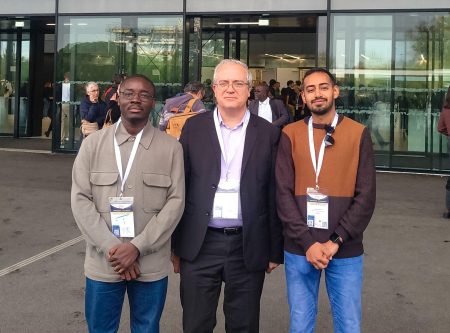
As part of the dissemination and knowledge-transfer activities of the INNOGOUV project, we had the pleasure of presenting three research works on French wine cooperatives at the 10th International Research Conference on Social Economy, organized by CIRIEC (International Centre of Research and Information on the Public, Social and Cooperative Economy) and the TerrESS Chair (Territories of the Social and Solidarity Economy Chair). The conference took place at Sciences Po Bordeaux and the Palais Atlantique, from October 27 to 29, 2025.
Placed at the heart of a week rich in exchanges, this edition shared its third day with the GSEF World Social and Solidarity Economy Forum (October 29-31), offering a particularly stimulating synergy between researchers, practitioners, and representatives of local authorities from all over the world. The debates focused on the theme "The role of the SSE in the socio-ecological transition," a question more than ever at the heart of contemporary issues. The conference indeed provides a privileged meeting space for both established and early-career researchers working on all components of the social economy: cooperatives, mutuals, associations, and foundations.
The three works presented in this framework focused on complementary themes at the crossroads of innovation, governance, and sustainability in the French cooperative wine sector: The first, titled "Drivers of the adoption of varietal innovation in French wine cooperatives and cooperative unions," explored the factors influencing the choice of cooperatives to adopt new vine varieties adapted to climate change and resistant to diseases.(https://hal.science/hal-05419093v1)
The second, titled "Inclusion of young people in French wine cooperatives and merchants," examined the representation of under-40s in governance bodies and managerial positions, as well as its impact on the environmental, social, financial, and qualitative performance of these structures.
The third, titled "Second-tier cooperatives in the French wine sector: an in-depth study of interactions between governance and sustainability," offered an analysis of the relationships between the governance models of second-tier cooperative structures and their orientation toward sustainable practices.